
Salvage value: Salvage Value Demystified: Its Impact on Asset Depreciation
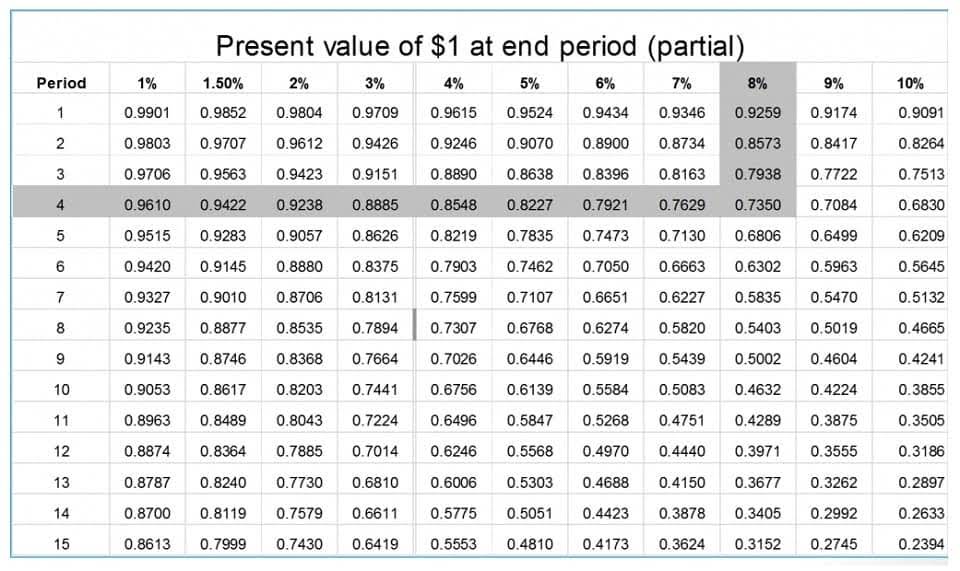
Market conditions play a significant role in determining an asset’s salvage value. The balance between supply and demand in the resale market affects an asset’s salvage value is treated as: salvage value, with high demand leading to higher salvage values and low demand resulting in lower values. To calculate salvage value, you’ll need to know the purchase price, useful life, and depreciation method used. When considering capital budgeting decisions, the concept of salvage value plays a crucial role.
Apricot Computers: A Simple History and Industry Impact

This significantly reduces the asset’s reported book value, which can have a negative impact on financial statements and result in higher-than-necessary tax deductions, distorting financial health. Salvage value is important in accounting because it directly influences how depreciation is calculated. Businesses can calculate their overall depreciation claim by subtracting this amount from the initial cost.

Step By Step: Checking Whether Your Salvage Car Qualifies
- The salvage value is subtracted from the cost of the asset to determine the total amount that will be depreciated.
- Salvage value is deducted from the purchase price of an asset to determine the total amount that can be depreciated over its useful life.
- Depreciation is an essential measurement because it is frequently tax-deductible.
- In summary, understanding salvage value helps businesses make informed decisions about investments, depreciation, taxes, and risk.
- Typically, the salvage value is determined by subtracting total depreciation from the asset’s original cost, often requiring judgment and market analysis.
- Carvana’s own help pages stress that every seller needs a valid title, a working odometer, and a vehicle they can safely drive during pickup or drop off.
- Salvage value refers to the estimated amount of money that an asset can be sold for at the end of its useful life.
Rapid technological change requires ongoing monitoring and analysis to estimate its impact on asset value. Businesses need to account for these costs in their salvage value estimates to ensure accuracy and compliance with regulations. The salvage value is the estimated value of an asset at the end of its useful life, which can be sold or scrapped. The salvage value equation is a mathematical formula used to calculate the residual value of Balancing off Accounts an asset after its useful life has ended. Deskera ERP’s robust auditing capabilities ensure that all asset transactions, including those related to salvage value, are accurately recorded and traceable. The total depreciation amount over the useful life is $45,000, and spreading it across 15 years gives an annual depreciation of $3,000 per year.
- Understanding the concept of salvage value is crucial in the realm of asset depreciation.
- Simply put, when we deduct the depreciation of the machinery from its original cost, we get the salvage value.
- Salvage value is the estimated amount an asset is worth at the end of its useful life.
- Declining balance depreciation is a method commonly used to allocate the cost of an asset over its useful life.
- However, it doesn’t become worthless; it still retains a salvage value of $5,000 after 5 years, which is what you expect you could get if you were to sell it at that time.
Methods for Estimating Salvage Value

This ensures compliance with accounting standards, maintains the integrity of financial data, and presents a realistic view of an organization’s value. Salvage value, also known as residual value or scrap value, is a fundamental concept in accounting and asset management. It refers to the estimated value that an asset will have at the end of its useful life. This figure is critical for businesses as it plays a key role in several https://reidsturck.jvai.site/working-capital-formula-how-to-calculate-working-2/ financial processes, including the calculation of depreciation, asset replacement planning, and overall financial strategy. Understanding how to accurately calculate salvage value is essential for businesses to manage their assets effectively.
- The concept of salvage value is a critical component in the asset lifecycle, influencing not only the financial accounting but also the strategic decisions regarding asset management.
- A higher salvage value for the existing machine would reduce the net investment required for the new machine, potentially making the investment more attractive.
- The insurance adjuster calculates the ACV of the roof at $10,000, with a depreciation of $4,000 and a salvage value of $1,000.
- Therefore, it is crucial to have a clear understanding of how to maximize a salvage value to gain the most benefit from the asset.
- In this section, we will explore some of the most commonly used methods for calculating depreciation using salvage value.
- It’s evident that these accounting practices are not just theoretical concepts but are actively shaping the financial landscape of businesses in various sectors.
Businesses must estimate how much an asset will be worth when it reaches the end of its useful life to ensure accurate financial reporting. Whether dealing with vehicles, industrial equipment, or real estate, knowing salvage value helps companies set depreciation rates, plan for asset disposal, and make better financial decisions. In summary, understanding salvage value helps businesses make informed decisions about investments, replacement cycles, and financial planning. Whether you’re a business owner, accountant, or financial analyst, considering salvage value ensures prudent resource allocation and effective capital management. Remember that while formulas and methods provide a framework, real-world judgment and context play a vital role in determining salvage value for specific assets.